Share Jerry Sylvan Deal's obituary with others.
Invite friends and family to read the obituary and add memories.
Stay updated
We'll notify you when service details or new memories are added.
You're now following this obituary
We'll email you when there are updates.
Select your format and elements to print

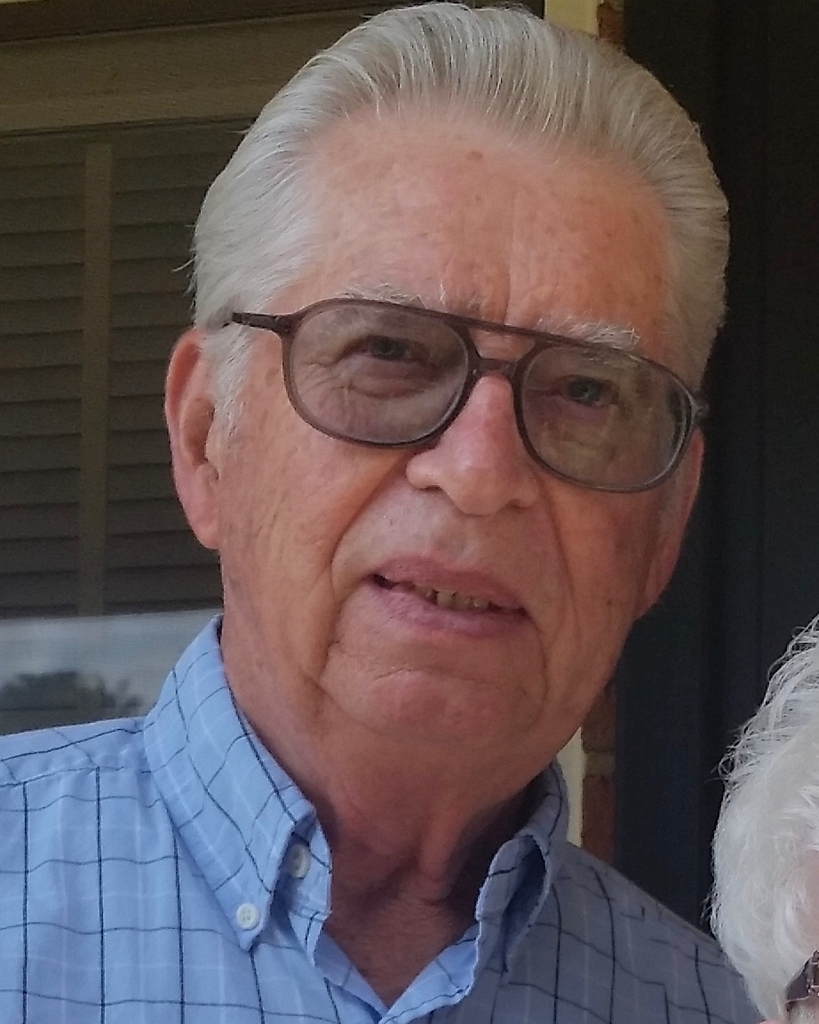


Jerry Sylvan Deal
Aug 1, 1934 — Sep 30, 2026
Woodfin
Jerry Sylvan Deal, 92, of 11 Elk Mountain Road, Asheville, widower of Barbara Ann (Wyatt) Deal, passed into the external embrace of his Creator and Redeemer on Wednesday, September 30, 2026, at the home he shared with his son and live-in caregiver, Greg Deal, after receiving dedicated, compassionate support and guidance from Four Seasons Hospice & Palliative Care.
Jerry was preceded in death by his father, Van Deal; his mother, Jessie Dean Robinson Deal; and his older brother and longtime hunting companion, David Deal.
Jerry leaves for all to contemplate a life lesson he taught not from a pulpit or in a classroom, but by living his testimony through action instead of just words alone: “Service to others above service to self is life’s most important mission and its highest purpose.”
Jerry sacrificed his own personal time and many of life’s pleasures, only to give anyone every ounce of energy and volunteer the little bit of personal time would set aside in an instant to help family, friends, neighbors and even strangers.
In addition to son Greg, Jerry leaves behind to cherish his memory his former daughter-in-law, Shea Deal, of Greenwood, S.C., who cared for him like he were her own father — and Jerry viewed her viewed her and treated her just like she were his biological daughter; two beloved grandchildren, grandson Cameron Deal, also of Greenwood, and Taylor Deal, of Simpsonville, S.C; a sister, Carole Deal Chambers and husband Joe, of Ashland, Va.; along with several nieces and nephews who loved him dearly and whom he loved with a pure heart, including cousin-in-law Karen Deal (and husband Jeff, who volunteered his time and effort to help Jerry with yard work and other things when a 2023 stroke left him incapable of doing it for himself, no longer able to drive and needing a walker for the rest of his life).
Karen cared for Jerry with a selfless love and affection for many years, buying and delivering his groceries, bringing him hot, home-cooked meals, visiting him often, taking him to sporting events and doctors’ appointments, among many other acts of love and compassion; and niece Janet Deal Macias, who he thought of as if she were his own daughter, and whom she treated like a father 18 years following the death of her beloved dad.
Conversely, Greg considered David like a second father.
David worked patiently and passionately to instill in his nephew a lifelong love for bass fishing, respect and appreciation for the largemouth species, in addition to other local freshwater fish, and a pro-level bass angler knowledge that Greg used with great success and enjoyed passing all he’d learned down to his son, Cameron, who used it to win the top two prizes while competing in his first-ever fishing tournament at age 6.
Not long after Barbara’s passing at 89 in April 2025, her beloved hairstylist, Sheila Hunter, who understood perfectly Mrs. Deal’s desire to look her best on the outside, but also used her time in the chair to earn Barbara’s trust and respect, which made Sheila’s advice, words of guidance, support and encouragement appointments that she viewed and looked forward to with an the type of anxious anticipation that would be most closely analogous to a child’s growing excitement in the days and hours before Christmas Day finally arrives.
Sheila, through a sincere desire to truly listen to Barbara and understand that her desire to keep the family home an immaculate space for all was actually her unique love language spoken from a wife to her husband that best communicated Barbara’s support, love for and admiration of her life partner.
Following Mrs. Deal’s 2025 death, Jerry struggled simultaneously in stoic silence with the loss of his wife and the sudden onset of both physical and mental declines that left him feeling useless as a man who prided himself on helping others.
As a self-reliant family provider and protector who grew up in The Silent Generation, one in which "stiff upper lip" and a "keep calm and carry on" attitudes were the baseline cultural expectations.
Society heavily rewarded emotional suppression disguised as "strength.” Vocalizing grievances, sadness or trauma was widely viewed as a complaint that could undermine collective morale or signal personal weakness.
When Sheila recommended a housekeeper
— her good friend, Lynn Dillingham — whether she did so knowingly or unknowingly, she provided Jerry with a housekeeper who became a friend who both Jerry and Greg called “family” and her biweekly were viewed as mini-family reunions.
Lynn reminded him of Barbara’s unique love language he needed in the final chapter of his life, but became a friend who he later counted as an unofficial Deal family member.
Jerry believed the most sincere way to fulfill life’s purpose was designing a mission field where denying the pursuit of personal pleasures and choosing to serve others above self — and demonstrating to them that true and sustainable joy is more valuable than fleeting happiness.
Jerry would refuse to accept or declined awards and public recognition for fulfilling God’s purpose as he outlined in personal reflections he wrote in a journal he kept in a bedside table, or penned as notations in his personal Bible, which served as undeniable evidence proving the foundation of his life’s purpose and mission was backed by scriptural support, and all praise for anything he did for others he would point directly to his Savior, Jesus Christ, for teaching him that service to others over service to self was a lesson Christ taught and demonstrated through actions that testified to the authenticity of his words and a lesson for all of humanity that altruistic acts of service to others requires no reward.
Jerry’s greatest fear was that the purpose of his life and how his dedication to its mission was destined to become little more than a footnote instead of a legacy that would extended well beyond the moment he took his final breath and never be carried into the future to serve as an inspiration for others who might pick up the mission and promote a belief in support of life’s greatest purpose.
Family on his late wife’s side, including the late Bobby Wyatt, his wife Tammy and their daughter Amy, along with niece Trish Wyatt, were among those outside the Deal family lineage he loved and cherished.
His pride in Trish’s accomplishments during a national championship women’s NAIA college basketball career at UNC Asheville — one secured by her game-winning shot in the 1984 title game vs. Portland — is just one example of how he took more pride in sharing and spotlighting others’ shining moments while feeling awkward and uncomfortable when asked to detail his own.
Jerry was a 1952 graduate of the former Woodfin High School, living less than a mile from the schoolhouse in the family home during The Great Depression, when obtaining squirrel meat was considered a delicacy at the time and was equivalent to a well-marbled ribeye, when comparing the hard times of the 1930s and early ‘40s to the normalization of luxuries that in childhood would’ve been quickly dismissed as a childhood fantasy.
He learned the value of conservation, helping neighbors and making the best of what little his family had.
There was no indoor plumbing, three siblings traded use of a tin bathtub brought to just enough warmth by adding some water his mother heated to a boil in pots on their wood-burning stove.
Almost all they needed was raised on the small family farm — and a good Christmas morning for a child likely featured a stocking containing an apple, an orange and a stick of peppermint candy.
A springhouse constructed over a tiny cool-water creek located near the back of their property served as the family’s only means of keeping perishable dairy products fresh.
Jerry’s father surprised him one Christmas morning by saving for months to add his son’s first-ever pocket knife to his stocking, and it was the most meaningful and practical gift Jerry said he ever received.
Learning to make the perfect bean shooter as a youngster, then perfecting his aim, was one personal story he deemed worth retelling.
It was at Woodfin High where he met his future wife of 71 years, Barbara Ann Wyatt, and then, following the couple’s marriage, he headed to Germany as an Army officer during the Berlin Crisis in 1953, being stationed in Germany for about a year. Barbara soon joined him to live there during his time abroad.
After returning to the U.S., he received training for a banking and finance career at the University of North Carolina’s School of Banking before launching his decades-long banking career, first at Wachovia in Asheville and later at The Bank of Asheville, where he worked his way up to becoming head of the bookkeeping department before later being named a vice president and considered an important, dependable and loyal confidant of female bank executive Helen Powers, prominent executive at the Bank of Asheville during the 1970s was and a trailblazer in North Carolina's corporate and civic history, breaking several significant glass ceilings, including becoming the first woman named as a senior vice president of any bank in the state of North Carolina and, following her retirement, was named by then-Gov. Jim Martin as Secretary of the State Department of Revenue in 1985, making her the first woman to ever hold that state cabinet position.
Jerry was instrumental in ensuring every bank employee safely evacuated the downtown banking center during a devastating 1969 fire that spread so rapidly that the bank and neighboring Dunham’s Music House burned to the ground in less than two hours.
Jerry and other bank leaders quickly set up and operated a temporary Bank of Asheville headquarters across the street, in downtown’s Pritchard Park, in the basement of another building, while a new Bank of Asheville underwent reconstruction in the footprint of the ashes of its predecessor.
Jerry helped ensure cash in the vault, scorched by the fire, was shipped to the federal government for replacement, and he and the bank team brought in their own blow dryers in spending weeks salvaging m checks water-soaked during firefighters’ efforts to extinguish the embers left burning in the wake of the blaze.
Jerry was employed with The Bank of Asheville during its 1979 merger with North Carolina National Bank (NCNB) and played a number of key support roles during the pivotal mid-1980s, after transferring to Charlotte, playing a critical support role in transforming The Queen City into “The Financial Capital of the South” and the second-largest banking center in the country, trailing only New York City.
Jerry’s transfer to Charlotte with NCNB in March 1986 to develop, lead and manage a crucial support services operations hub, starting with just six employees and growing it to nearly 90 in just three years later, is something retired NCNB CEO Hugh McColl worked hand-in-hand with Jerry, and when learning Jerry’s decision to transfer back to his hometown in 1989, Hugh asked Jerry to select a any painting off his office wall inside the Bank of America Tower in downtown Charlotte, which was the bank’s national headquarters.
That painting hung on his bedroom wall for the next 36 years.
Upon first arriving in Charlotte in 1986, Hugh appointed Jerry to a delegation team tasked with traveling throughout the South — including to places South Carolina, Florida, Texas and Georgia — to assist the CEO in a clearing a series of legal and regulatory hurdles blocking McColl’s ambitious and aggressive expansion strategy, with a goal of transforming a North Carolina-based bank into a nationwide one.
Working in an NBCB-owned support services facility, within the shadows cast by the now-Bank of America Tower, Jerry and his team launched NCNB’s first automated bank-by-phone system from 1986-89, a system before the dawn of the Information Age that helped lay the foundation for what became the Internet online banking of today.
He transferred back to Asheville after his wife inherited the longtime family home following her mother’s passing in October 1989, and Jerry, with help from only nephew Bobby Wyatt, remodeled and modernized one of the Woodfin’s oldest homes (built in 1911), and did so in just six months while he and his wife lived for six months in Biltmore Village-area apartment.
Jerry and Barbara then spent the next 36 years of living in the home together, before Barbara’s passing in April 2025 and then Greg moving from South Carolina to his father’s home in the Woodfin township a few months later to serve as his live-in caregiver when his health began a rapid decline soon after Barbara’s 2025 passing.
During Jerry’s final years of a noteworthy and consequential banking career, he saw NCNB transition to NationsBank and eventually to a global icon, known today as Bank of America, the final rebranding occurring two years after his 1996 retirement following what became a successful battle against cancer.
Jerry accepted his Christian salvation at a Rev. Billy Graham crusade series stop in Asheville in August 1953 — which took place inside the former Asheville City Auditorium, historically preserved and operating today as the Thomas Wolfe Auditorium inside the Harrah's Cherokee Center - Asheville complex.
Following his 1954 marriage to Barbara by the Rev. Wesley Sprinkle at the old Newbridge Baptist Church building along Merrimon Avenue in Woodfin, Jerry and Barbara later joined Elkwood United Methodist Church, adjacent to the home on Elk Mountain Road, and he and Barbara became longtime dedicated members, with Jerry serving as church treasurer and beginning the Elkwood UMC’s first teen youth ministry program. He and Barbara also sang in the church choir and were active members of the men’s group and the women’s auxiliary, respectively.
Jerry’s biggest passions and joys in life came from the time he devoted to his two beloved grandchildren and patiently teaching them to appreciate how to the simpler things in a life filled with the best toys one could buy.
With granddaughter Taylor, he taught her to build birdhouses and become a BB gun-shooting phenom, with him blowing up balloons and positioning them around the home as targets, then stood in awe, unable to hide the joy of one filled with grandfatherly pride that his beautiful, girly-girl grandchild could rapidly pick off each balloon that he thought of her as a naturally gifted marksman.
Cameron became like his best buddy and a grandson he supported with all his love despite admitting in private he felt like he could not converse with him in a way that satisfied his unique style of intellectual curiosity or interest Cameron had that he was more of the student than the teacher. However, he later learned to enjoy hearing Cameron’s unique perspective on all things.
Jerry enjoyed hunting, fishing, tomato gardening — and watching North Carolina Tar Heels basketball games. It was his passion for the latter that inspired Greg to become a sportswriter.
Jerry’s most enjoyable private time was spending cool spring evenings relaxing in a near-century-old rocking chair on his deck, something his late wife’s mother, Rose Wyatt, had enjoyed many years prior.
Dad would listen to the sounds of different birds and wait for bears, wild turkeys, squirrels, rabbits and other wildlife to pass through his well-manicured yard, which was a reflection of a personal commitment to a vision of landscaping focused on preservation and conservation instead of terraforming and transformation.
He held similar beliefs to those of retired golfing legend Jack Nicklaus, widely considered one of the best golf course designers ever, who said in “Principles of Golf Course Design” that one should “respect the natural lay of the land” and that is entirely consistent with the intention of Mother Nature.
A man who lived to please and serve others before — or even in lieu of — serving himself died peacefully in while sleeping, exactly as he had wanted, and straight into the embrace of Jesus, who will call him a “good and faithful servant” and reward him for a lifetime of self-sacrifice for all he met — a man who fulfilled the emolument of a faithful Christian: Words can serve as an important testimony about your beliefs; however, actions are evidence proving the sincerity of those words and the power of the beliefs you’ve proclaimed.
May we all celebrate a man who lived life’s purpose and made that purpose into a mission and a mission into a legacy that’s a lesson only Jerry could’ve taught.
Graveside services, conducted by Tim Warren, will be 11 a.m. Saturday, October 3 at Ashelawn Gardens of Memory, 901 Aiken Road, Asheville, NC, where he will be buried alongside his late wife with military honors and the in-service playing of a song he listened to nightly following his wife’s passing that bright him comfort and peace.
Private visitation for immediate family will be from 4 p.m. to 5 p.m. Friday, Oct. 2 at Anders Rice & Roper Funeral Home, 1428 Patton Avenue, Asheville, NC.
The funeral procession from Anders Rice & Roper to Ashelawn Gardens of memory will leave at 10:15 a.m. Saturday, and those wishing to be part of the procession to attend the graveside services are asked to gather at Anders Rice & Roper at 9:45 a.m. for 10:15 a.m. departure.
In lieu of flowers, the family requests that anyone wishing to honor Jerry’s memory and legacy donate to either the Four Seasons Foundation or CenterWell Home Health of Asheville.
Anders Rice & Roper Funeral Home and Cremation Center is honored to serve Jerry's family.
Service Schedule
Past Services
Private Visitation
Friday, October 2, 2026
4:00 - 5:00 pm (Eastern time)
Anders Rice & Roper Funeral Home
Graveside Service
Saturday, October 3, 2026
Starts at 11:00 am (Eastern time)
Ashelawn Gardens of Memory
Guestbook
Visits: 673
This site is protected by reCAPTCHA and the
Google Privacy Policy and Terms of Service apply.
Service map data © OpenStreetMap contributors